Where Ancient Souqs Meet Futuristic Skylines and World-Class Culture
By The Next Stamp Travel Co. | Published April 2026
Why Doha?
Doha is one of the great surprises of modern travel. A city that barely existed on the map half a century ago, it has risen from the Arabian Gulf shore with a skyline of gleaming towers, a museum infrastructure rivaling the finest in the world, and a cultural ambition matched by almost limitless investment. And yet beneath all of it, the soul of old Qatar remains stubbornly, beautifully intact.
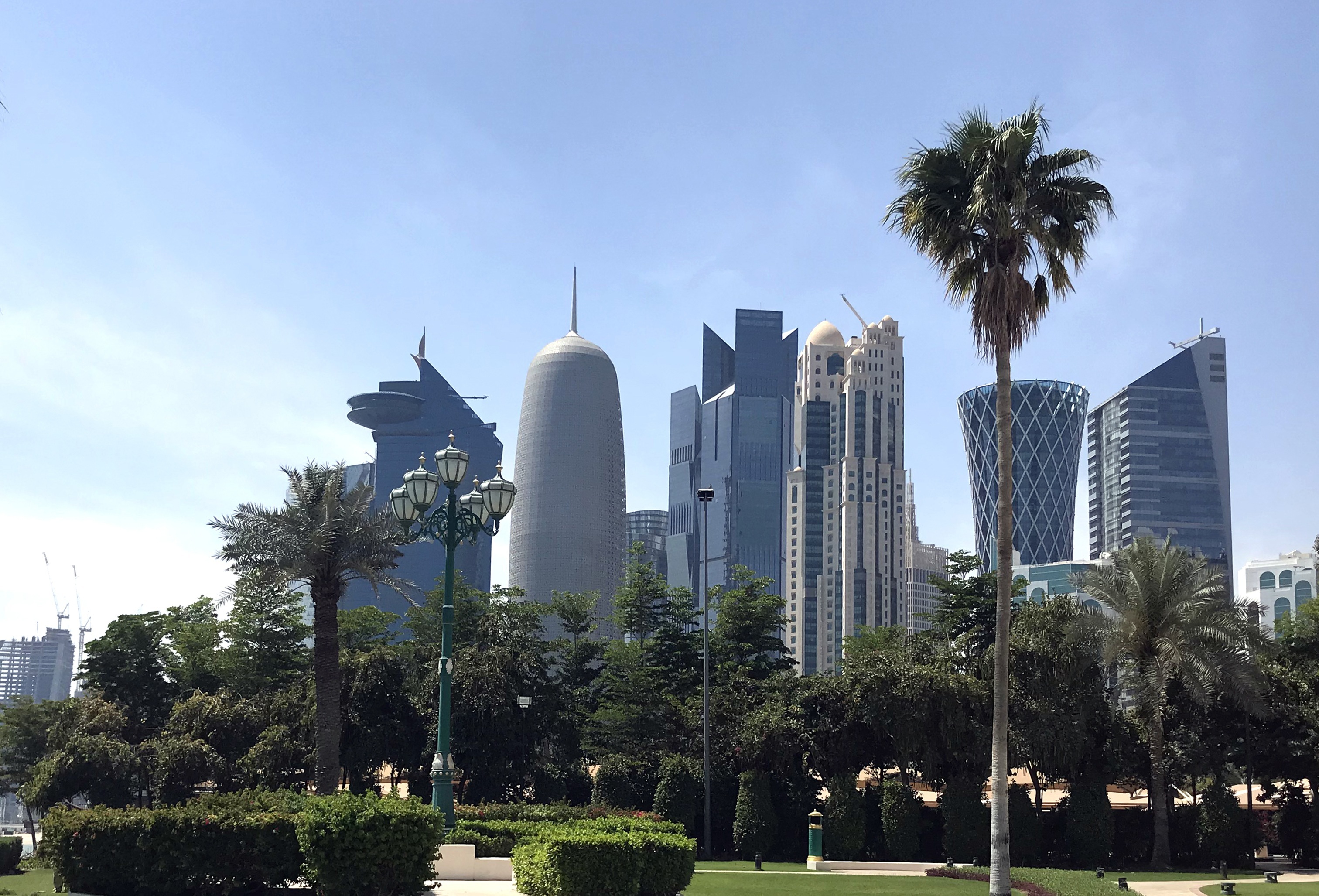
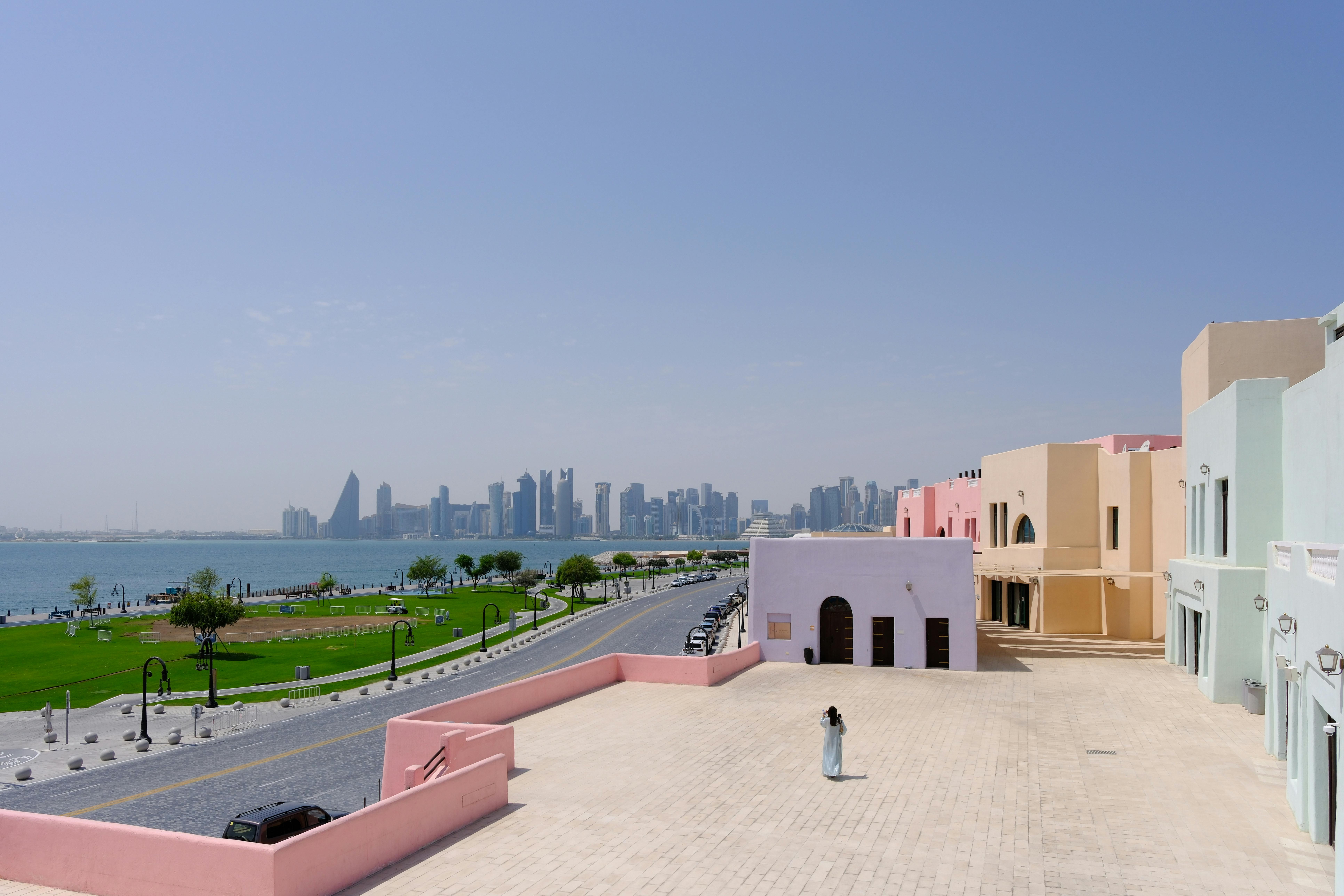
You will feel it the moment you step into Souq Waqif as the sun goes down. The lanterns come on, the smell of cardamom and grilled meat drifts through the restored mud-rendered lanes, and you realize this is not a recreation of something old. This is the real thing, still alive, still central to the city’s identity. Walk north along the Corniche the following morning and you will see the gleaming West Bay towers reflected in the flat water of the bay, a skyline that would look at home in Hong Kong or Dubai but carries its own distinct character. Everywhere in Doha, the old and the new exist in genuine conversation.
Two days here is enough to understand why people come and why they always leave wanting more. This itinerary is built for first-time visitors, couples, and culturally curious travelers who want to experience the city across its full range: the UNESCO-collected Islamic art, the Mediterranean promenades of The Pearl, the sensory overload of the souq, and the seafood-and-saffron cooking that has defined Qatari hospitality for generations.
Best time to visit: October to April (15-25C, festivals, outdoor life)
Where to stay: West Bay or Corniche for easy access to everything
What to expect: World-class museums, vibrant souqs, stunning architecture, exceptional food
Hidden gems: Msheireb Museums, karak tea stands, the Qanat Quartier at The Pearl
Local tip: Use the Doha Metro for West Bay to Souq Waqif. Dress modestly at heritage sites. Always accept a cup of gahwa.
What This 2-Day Doha Itinerary Covers
These 2 days in Doha are structured to give you the full picture of the city without rushing. Day One belongs to the waterfront and the historic core. You will start with a traditional Qatari breakfast inside Souq Waqif, spend a morning inside one of the world’s greatest Islamic art collections at the Museum of Islamic Art, walk the Corniche as the city comes to life, and end the night deep in the souq’s lantern-lit lanes with dinner at one of Doha’s most beloved Lebanese restaurants.
Day Two opens up the modern city. The Pearl Qatar in the morning, with its Mediterranean marina and designer promenade, then Katara Cultural Village in the afternoon for galleries, pigeon towers, and an amphitheatre unlike anything else in the Gulf. The evening brings the National Museum of Qatar, a walk back to the Corniche at golden hour, and a farewell dinner at one of West Bay’s most celebrated restaurants.
Download the complete 2-day Doha itinerary and travel guide.
Day 1: The Corniche, the Museum, and the Soul of Old Doha
Morning: Traditional Breakfast and the World’s Best Islamic Art
Start early at Al Shomous, tucked inside the Souq Waqif district near Al Corniche Street. This is the place for a genuine Qatari breakfast, and you should order the full spread: regag (paper-thin flatbreads cooked on an open dome over charcoal), balaleet (sweetened vermicelli noodles topped with a folded egg), and shakshuka-style eggs with tomato and cream cheese. A small pot of gahwa, the cardamom-and-saffron Arabic coffee that is central to Qatari hospitality, rounds out the meal. Arrive before 8:30 AM to experience this at its most authentic, when local workers and early market traders are the primary clientele.
From there, walk or take a short taxi south along the Corniche to the Museum of Islamic Art. Designed by I.M. Pei and opened in 2008, the building sits alone on its own artificial island off the waterfront. The architecture is worth 30 minutes of your time before you even step inside: it is a masterpiece of geometric abstraction drawn from classical Islamic sources, and it photographs beautifully in the morning light. Inside, the collection spans 1,400 years and covers manuscripts, ceramics, jewelry, carpets, and metalwork from Spain to Central Asia. Allocate at least 90 minutes. If you have energy afterward, the rooftop cafe has some of the finest views of the Doha skyline across the bay.
Afternoon: The Corniche Walk and Souq Waqif
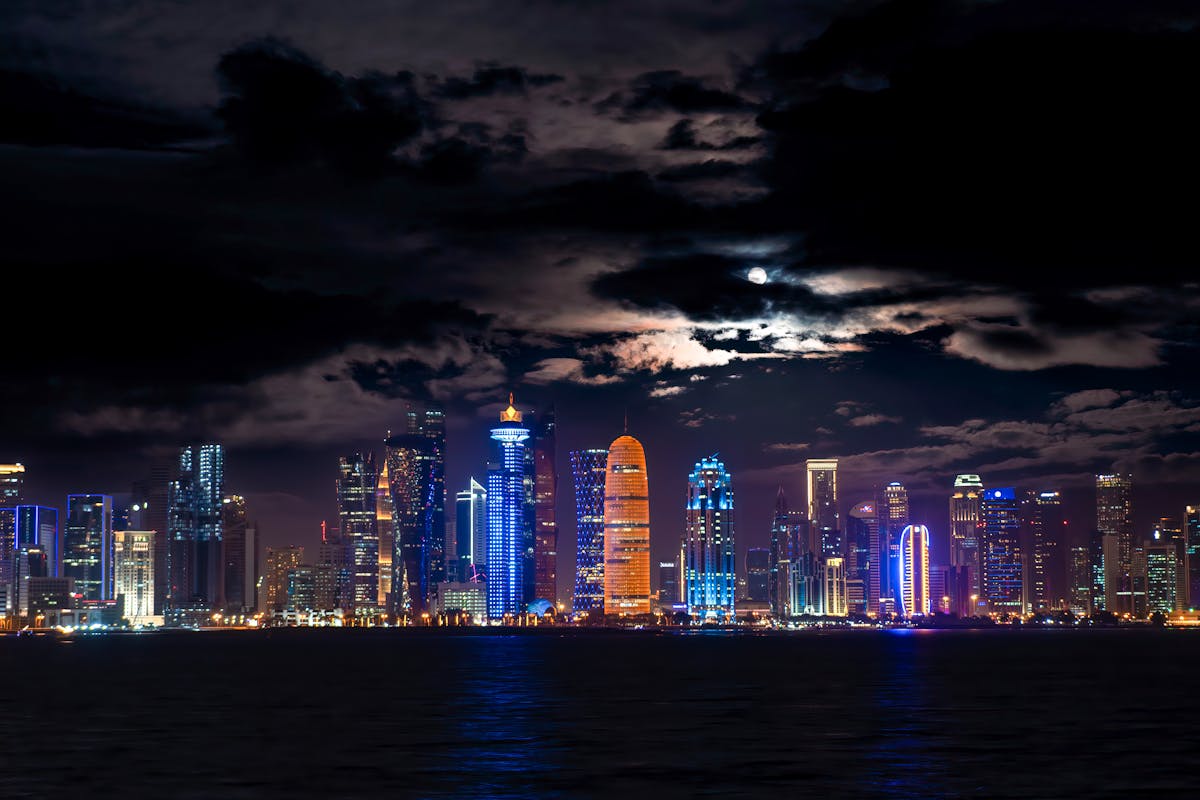
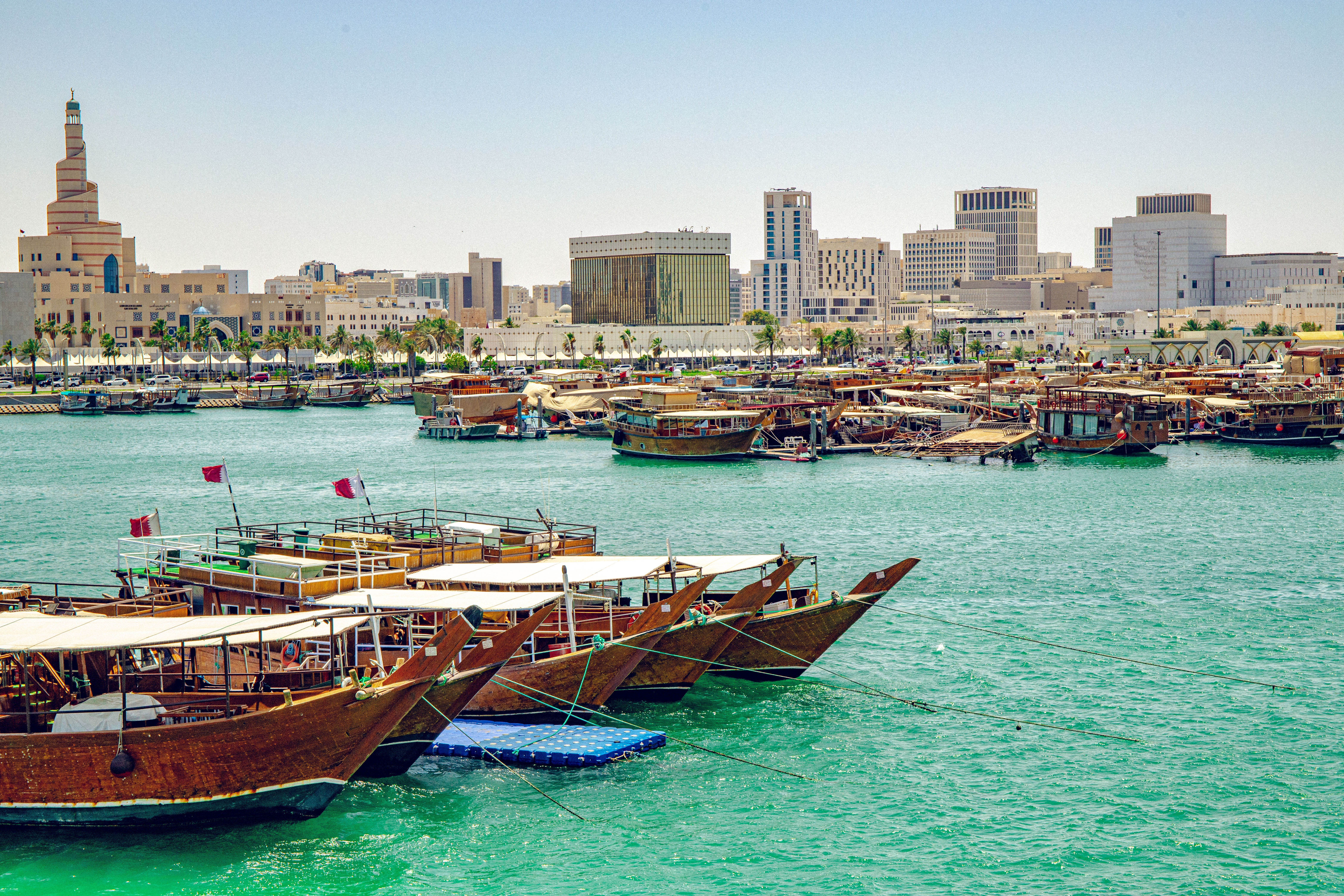
After the museum, walk north along the Corniche toward the city center. The 7-kilometer promenade is one of Doha’s great public spaces, wide, well-maintained, and lined with a view across the bay that stops people in their tracks. The stretch between the MIA and the dhow harbor, where traditional wooden fishing boats are still moored, is the most photogenic section. The towers of West Bay reflect in the flat water of the bay in a way that feels genuinely cinematic in the early afternoon light.
Stop for lunch at Kabab Al Tayab inside Souq Waqif, one of the market’s oldest and most trusted restaurants. The chelo kebab, skewered ground meat over fluffy saffron-spiked rice, is the dish to order. Arrive before 1:00 PM to get a courtyard table before the lunchtime crowd fills the space. After lunch, spend the afternoon working through the souq’s distinct sections: the spice alley where open sacks of dried limes, sumac, and saffron line both sides of the lane; the gold and jewelry district; the falconry equipment shops; and the live bird market at the far end.
Evening: Souq Waqif After Dark and Dinner at Baron
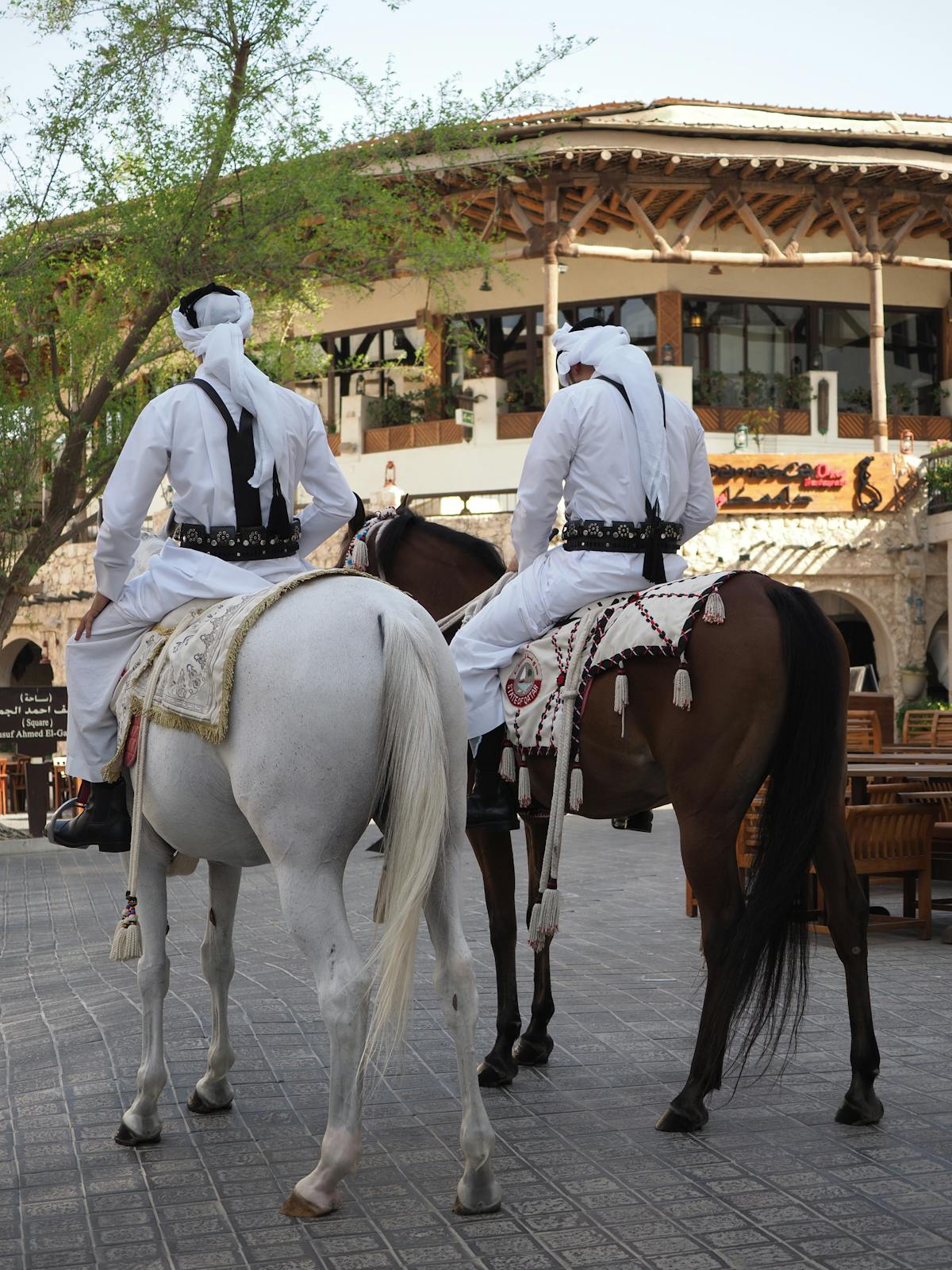
Souq Waqif transforms completely after sunset. Come back around 7:00 PM, when the lanterns have come on and the temperature in winter has dropped to a comfortable warmth. The entire city seems to converge here: Qatari families, expats, visitors from across the Gulf, all moving through the lanes in a way that feels genuinely alive. Stop at a shisha cafe or a juice stand and simply absorb the atmosphere before dinner.
Dinner is at Baron, in the Mina District a short taxi from Souq Waqif. Founded in Beirut and transplanted to Doha’s emerging waterfront district, Baron focuses on elevated Middle Eastern cooking with serious ingredient purity. The roasted cauliflower with tahini and pomegranate, the carrot hummus with freshly baked pita, and the saffron-kissed slow-roasted lamb are the highlights. The interior is warm and candlelit, an ideal landing point after the sensory overload of the souq. Reservations are recommended on weekends. If the schedule allows, consider an evening dhow cruise departing from the harbor just south of the museum: 60 to 90 minutes on the water at night, with the West Bay skyline glowing across the bay, is one of Doha’s finest experiences.
Day 2: The Pearl, Katara, and the City at Golden Hour
Morning: Breakfast at The Pearl and Porto Arabia
Start Day Two at one of the waterfront cafes along Porto Arabia’s main promenade at The Pearl Qatar. Cafe Illy and its neighboring spots open early and serve genuinely good espresso, pastries, and light breakfast plates with views of the marina and the rows of luxury yachts moored along the dock. The promenade is at its most peaceful before 9:30 AM, when the morning light is soft and the boats are reflecting off the still marina water. This is the right hour to photograph The Pearl at its most photogenic.
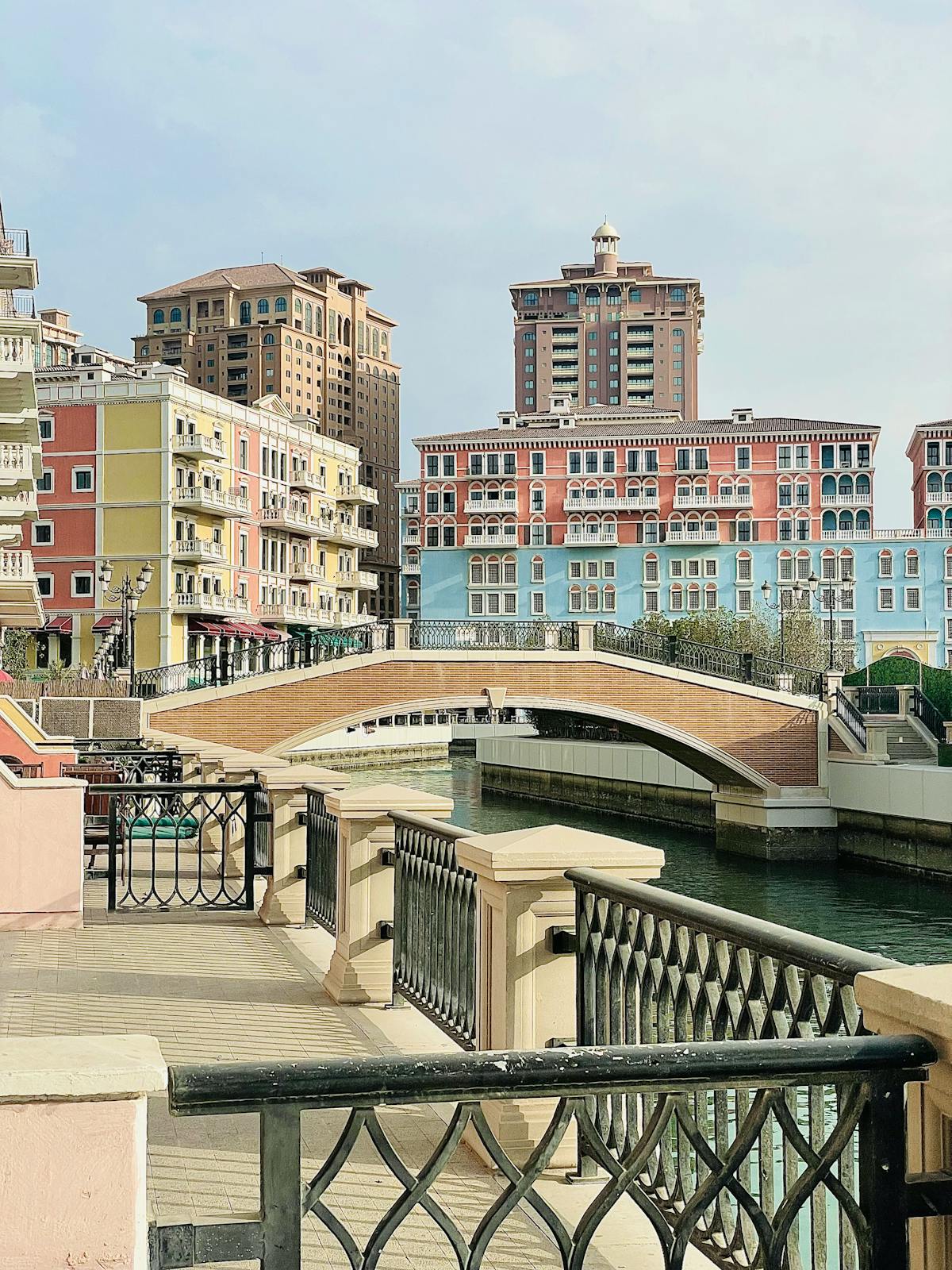
After breakfast, spend 90 minutes walking the full Porto Arabia circuit. The main promenade, the residential towers rising above the marina, the boutiques and specialty food shops at ground level. Then cross to Qanat Quartier, The Pearl’s Venice-inspired precinct, where colored facades line narrow waterways and gondola boats are available for short rides. It sounds gimmicky from a description, but the execution is genuinely charming, and it photographs unlike anything else in the Gulf.
Afternoon: Katara Cultural Village and Lunch at Bayt El Talleh
A 10-minute taxi from The Pearl, Katara Cultural Village is one of the most underrated attractions in Qatar. The pigeon towers, ancient-looking stone structures used to house thousands of doves, are unlike anything else you will see in the Gulf and are genuinely unmissable for photographers. Walk through the main cultural boulevard, stopping into the galleries and exhibition spaces. Katara hosts frequent temporary exhibitions covering Qatari and international art, and many are free to enter. The Katara Amphitheatre is worth walking through even when no performance is scheduled: the architecture blends classical coliseum forms with Islamic detailing in a way that creates something genuinely extraordinary.
Lunch is at Bayt El Talleh, situated above Katara with a panoramic terrace looking out over the cultural village and the Gulf beyond. It serves some of the finest Lebanese food in Doha. The hummus is extraordinarily creamy, the mixed grill is charred perfectly, and the fresh tabbouleh is a welcome counterpoint to richer dishes. Ask for a terrace table when you reserve. The view over Katara’s rooftops and down to the water is one of the best al fresco lunch settings in the city.
Evening: National Museum, the Golden Hour, and a Farewell Dinner
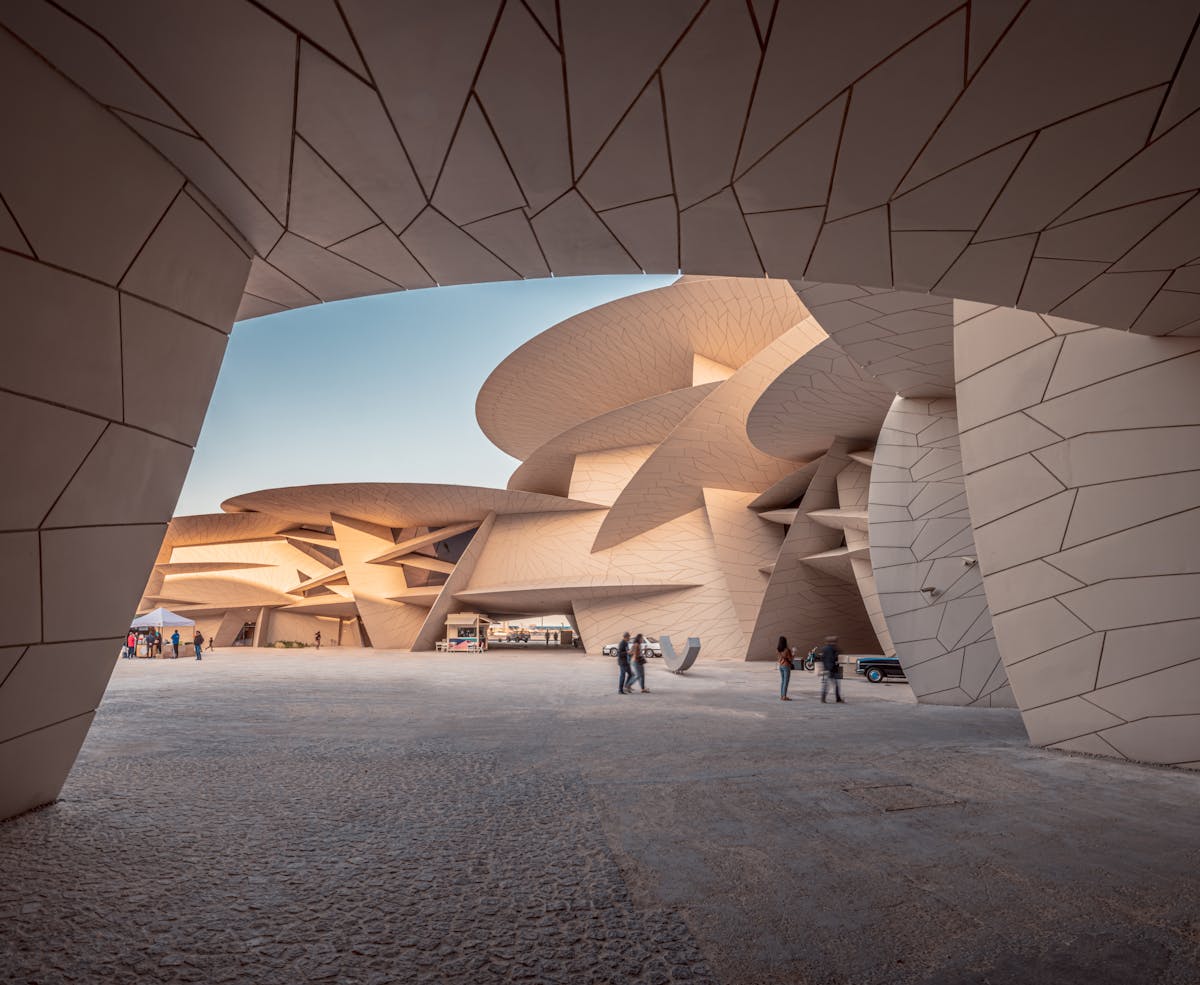
On your way back south toward the Corniche, stop at the National Museum of Qatar. Jean Nouvel’s building, designed as a series of interlocking desert rose discs, is one of the most extraordinary pieces of architecture in the entire Gulf region. Even if you do not enter, circling the building on foot and photographing it in the late afternoon light is worth the taxi detour. The museum stays open until 9 PM, making a late afternoon visit entirely workable after Katara.
Return to the Corniche for the golden hour. Position yourself somewhere between the MIA and the dhow harbor, facing north toward the towers. This is the most photographed view in Qatar: the West Bay skyline glowing in the late sun, mirrored in the flat water of the bay. This is where Doha reveals its full character, a city that has built itself into something genuinely magnificent in a remarkably short time.
The farewell dinner is at COYA Doha at the W Hotel in West Bay. The arroz Nikkei (Chilean sea bass with chilli and lime), the tiradito, and the miso-glazed beef ribs are genuine highlights. The interior, deep amber tones, exotic plants, a soundtrack that builds through the evening, is one of the most atmospheric dining rooms in the city. Reservations are essential, particularly on Thursday and Friday evenings. Afterward, take the elevator up to the WET Deck for a final nightcap with Doha’s skyline spread out below.
Why You Need the Full Doha Travel Guide
This blog gives you a genuine overview of what 2 days in Doha looks like. It covers the big landmarks, the neighborhood logic, the restaurants worth your time, and the rhythm of a well-planned 48 hours in one of the Gulf’s most compelling cities. But a great trip and a flawless trip are two different things, and the difference is almost always in the details.
The full guide goes beyond what this post can cover. It includes hotel-by-hotel comparisons across eight of Doha’s finest properties, from the Four Seasons Doha with its private beach to the Souq Waqif Boutique Hotels for travelers who want to sleep inside the historic market district. It covers all nine top attractions with opening hours, insider timing advice, and navigation notes. The restaurant section covers all six of the best dining experiences in the city, with reservation strategy, what to order, and what to skip. There’s a full packing list, an attire guide, and seven insider tips that took real time in the city to discover.
You have done the research to find Doha. The guide handles the rest so that your 2 days here become exactly what they should be: memorable, smooth, and worth every hour spent.
Your Doha adventure is waiting.
The complete guide has everything mapped out: hotels, restaurants, tours, logistics, and insider tips built from real travel experience. Stop researching and start packing. Get the full guide here
Final Thoughts on Doha, Qatar
Doha is genuinely one of the most underrated destinations in the world right now. Travelers who expect a generic Gulf city find something far richer: a real intersection of Arabian heritage, Islamic art on a museum level, international cuisine that rivals any major food city, and a warmth toward visitors that is built into the culture rather than performed for tourism. The Corniche at sunrise, gahwa at a karak tea stand in Souq Waqif, the view from the W’s rooftop, the first moment you step into the Museum of Islamic Art and look up at that soaring atrium. These are not the experiences of a city going through the motions. They are the real thing.
Is it worth the trip? Absolutely. Is two days enough? Enough to fall in love with it, yes. Enough to see everything? No, and that is the point. Doha rewards return visits. The Msheireb Museums, the Al Zubarah Fort UNESCO site two hours north, the Inland Sea for a desert safari to the edge of the sand. There is always more.
Planning your first trip to Doha? Drop your questions in the comments below. We read them all and respond to every one. The city deserves its time in the spotlight, and we are here to help you make the most of yours.
Ready to make it happen? Get the complete Doha travel guide here and start counting down the days.